
Building a vacation home – permits, layout and mistakes
Planning a lake house or beach cottage? How to think about the lot, permits, septic, moisture, the porch and guest beds – and what to check first.
Reading time about 8 minutes
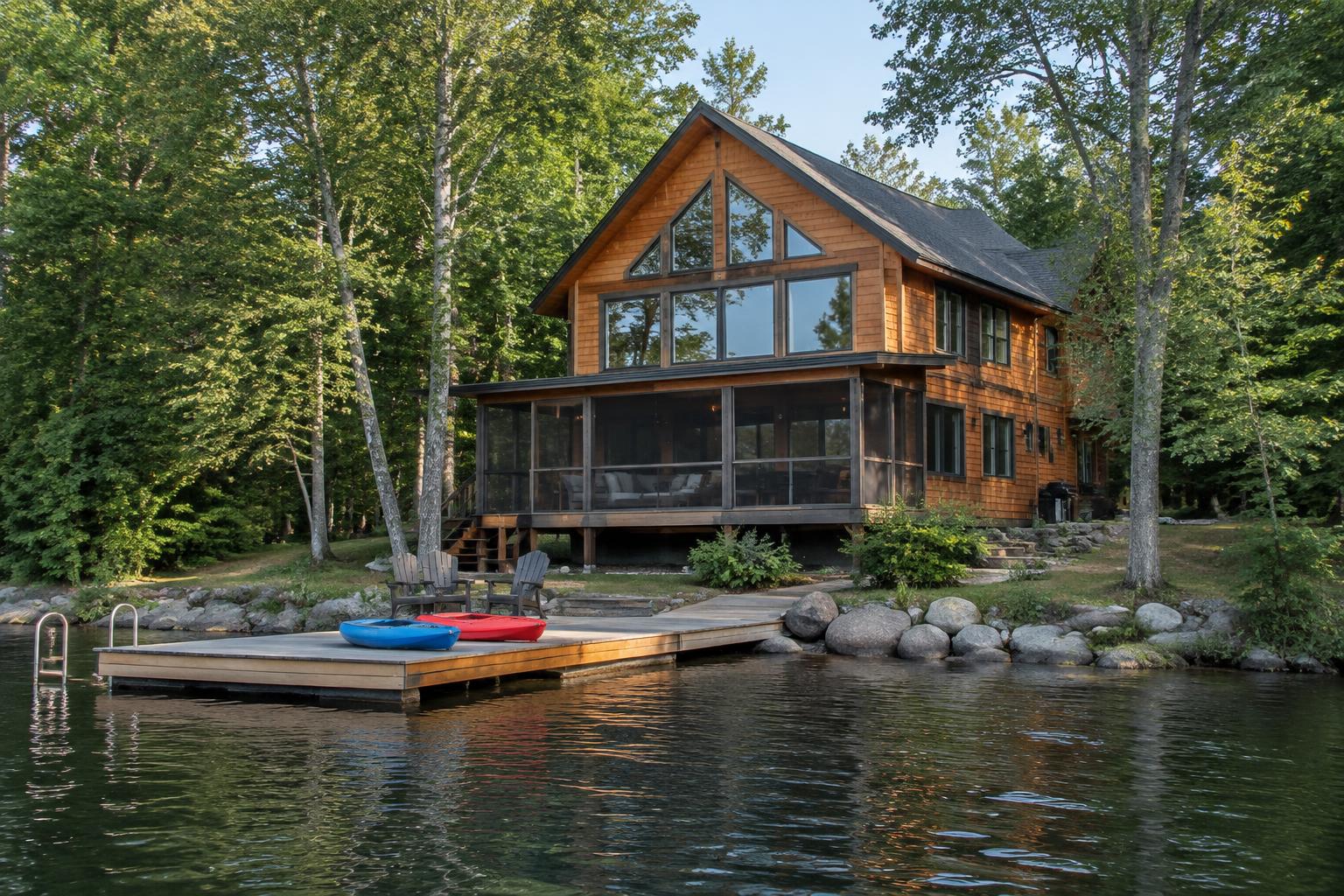
Short answer: how to build a vacation home that works
Start with the lot, not the house. Check zoning, shoreline setbacks and whether there is public water and sewer. That decides where the house can sit, how big it can be and what it costs. Then decide on seasonal or year-round use, because that drives insulation, foundation and heating.
Once the limits are clear, draw the plan around how you actually use it: how many guests stay over, where the porch gets evening sun and where wet towels and gear go.
What permits do you need?
A new house needs a building permit from your county or town, and zoning sets setbacks, height and lot coverage. Lakefront and coastal lots often have shoreland or coastal zone rules, and HOAs may add their own. Ask the building department early.
- Check zoning and setbacks.
- Check shoreland or coastal rules and flood zones.
- Find out about well, septic or public utilities.
- Ask about HOA rules and short-term rental limits.
Lot, foundation and moisture
Lake and beach lots are often sand, rock or wet soil. A soil test guides the foundation choice. Grade the lot so water runs away, and ventilate or condition any crawlspace.
Well and septic
Without public sewer you need a septic permit, usually based on a perc test, and the drain field needs space and setbacks from the well and the water. Do this before fixing the house position.
Seasonal or year-round?
A seasonal house must still survive standing empty: plumbing must drain down and ventilation must work. For year-round use, size insulation, windows and HVAC for your climate zone now. Check electrical service if you want a heat pump, hot tub and EV charger.
Vacation home layout: porch, bunk rooms and storage
Face the great room and porch toward the view and evening sun. Count beds, not bedrooms: a bunk room, sleeping loft or guest cabin adds many beds. Add a mudroom, an outside storage room for kayaks and furniture, and plan kitchen and baths so an addition can connect later. Good locks, timer lights and cameras protect a house that often stands empty.
Common mistakes when building a vacation home
- Septic sorted too late – the house has to move.
- Shoreline setback missed – permit refused.
- Porch in evening shade – barely used.
- Too few beds – cramped every holiday.
- No storage – gear takes over the house.
- Plumbing that cannot drain – frozen pipes.
- No plan for adding on – expensive later.
Checklist before you build
Save the list and check it off before you apply.
- Zoning and setbacks confirmed.
- Shoreline and flood rules checked.
- Well and septic permitted.
- Soil tested and foundation chosen.
- Seasonal or year-round use decided.
- Porch, beds and storage drawn.
- Driveway, parking and step-free entry planned.
- Plans, elevations and site plan ready.
Draw your vacation home before you decide
In MyRoomCraft you sketch the volume, choose roof and siding, see it in 3D and draw the floor plan to scale. Draw two or three options and compare them.
Frequently asked questions
Do I need a permit to build a vacation home?
Yes. A new house needs a building permit from your county or town, plus zoning approval. Lakefront and coastal lots often have extra shoreland or coastal rules. Ask the building department what applies to your lot before you finalize the design.
How close to the lake can I build?
Shoreland rules usually set a minimum setback from the water, and the distance varies by state and county. Some areas also limit tree removal and impervious surfaces. Check the local shoreland ordinance before you buy or draw.
How does septic affect the design?
The septic permit usually depends on a perc test, and the drain field needs space and distance from the well and the water. That can decide where the house sits, so test early.
Can I rent out my vacation home?
Often, but many towns and HOAs regulate short-term rentals with permits, taxes or limits. Check local rules and your HOA before you count on the income.
Codes and zoning vary by state, county and city. Always check with your local building department and HOA before you build.