
Building a holiday cottage – rules, layout and mistakes
Planning a holiday cottage? How to think about the plot, planning permission, drainage, damp, the terrace and guest beds – and what to check first.
Reading time about 8 minutes
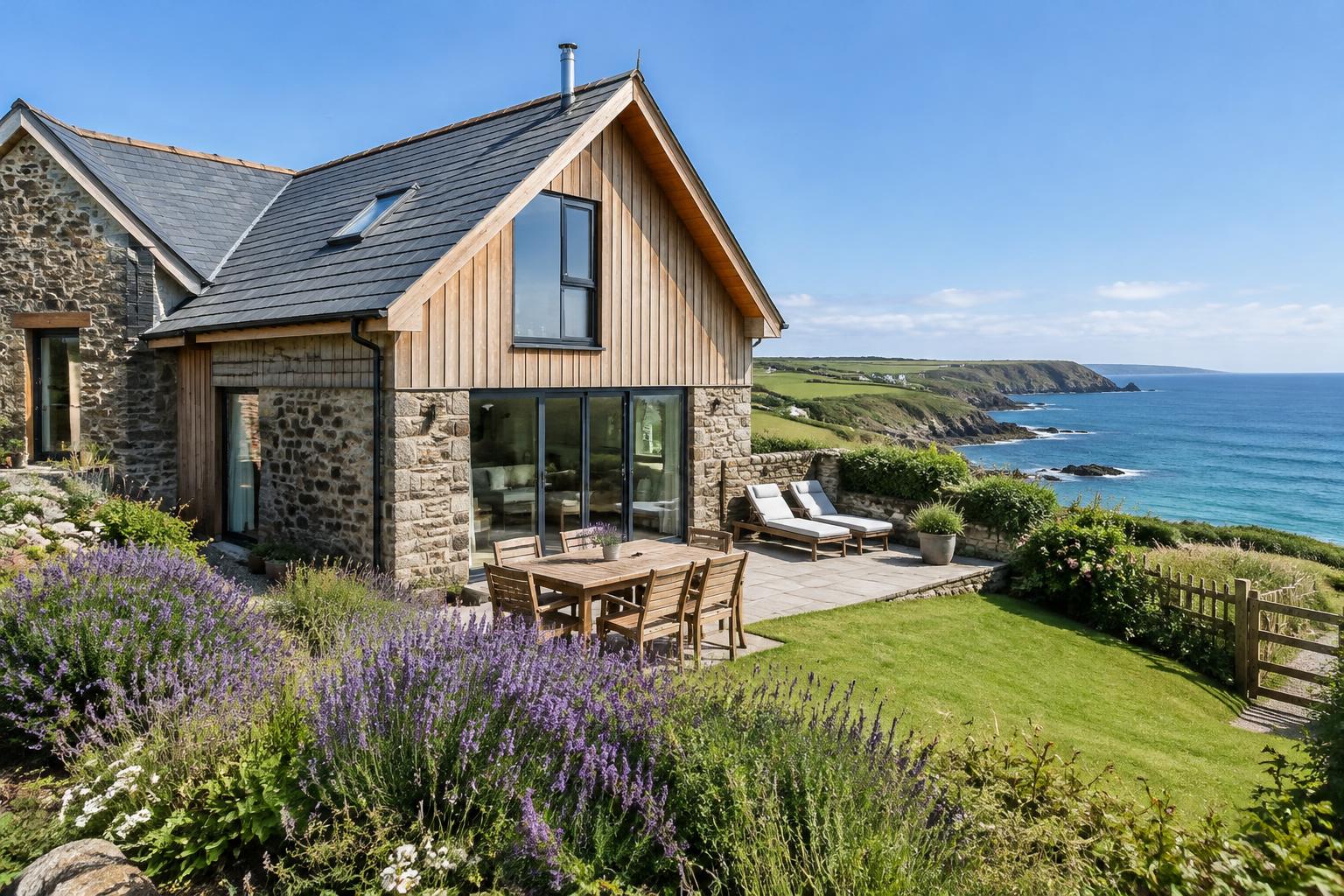
Short answer: how to build a holiday cottage that works
Start with the plot, not the house. Check the local plan, any coastal or landscape designations and whether mains water and sewer are available. That decides where the cottage can sit, how big it can be and what it costs. Then decide whether you will use it in summer only or all year, because that drives insulation, foundations and heating.
Once the limits are clear, draw the layout around how you actually live there: how many people stay over, where the terrace gets evening sun and where wet swimwear and garden furniture go.
What rules apply to a new holiday cottage?
A new dwelling needs full planning permission. Holiday lets may also carry planning conditions, and in National Parks, AONBs and conservation areas design rules are stricter. Building Regulations apply on top. Talk to the council's planning team through pre-application advice before you finish the design.
- Read the local plan or ask for pre-application advice.
- Check National Park, AONB, conservation and flood designations.
- Find out about mains water and drainage.
- Ask about holiday-let conditions and design rules.
Plot, foundations and damp
Coastal and rural plots are often rock, sand or clay. Get a ground investigation before choosing foundations. Lead rainwater away from the house and ventilate any suspended floor – damp from below is one of the most common causes of mould in holiday homes.
Water and drainage
Mains drainage is usually simplest. Otherwise you need a septic tank or package treatment plant that meets the general binding rules or holds an environmental permit, and ground conditions decide what works. Sort drainage before fixing the position of the house.
Summer use or all year round?
A summer-only cottage must still cope with standing cold and empty all winter: pipes should drain down and ventilation should run when nobody is there. If you may use it all year, size insulation, windows and heating for that now – it is far cheaper than upgrading later. Check the electricity supply if you want a heat pump, sauna and EV charging.
Holiday cottage layout: terrace, beds and storage
Put the living room and terrace where you want to sit in the evening and think about overlooking. Count beds, not bedrooms: bunk beds, a sleeping loft or a garden annexe give many beds on a small footprint. Add a boot room for wet kit, an outside store for furniture and bikes, and plan kitchen and bathroom so an extension can join later. Good locks, timer lighting and an insurer-approved alarm protect a house that often stands empty.
Common mistakes when building a holiday cottage
- Drainage sorted too late – the house has to move.
- Designations missed – permission refused.
- Terrace in evening shade – barely used.
- Too few beds – cramped every visit.
- No store – furniture and tools take over.
- Pipes that cannot be drained – frost damage.
- No plan for extending – expensive later.
Checklist before you build
Save the list and tick it off before you apply.
- Planning position confirmed with the council.
- Designations and flood risk checked.
- Water and drainage solved.
- Ground assessed and foundations chosen.
- Summer or all-year use decided.
- Terrace, beds and storage drawn.
- Access, parking and step-free entry planned.
- Plans, elevations and site plan ready.
Draw your cottage before you decide
Close the cottage with the drawing tool: in MyRoomCraft you sketch the volume, choose roof and cladding, see it in 3D and draw the layout to scale. Draw two or three options and compare them.
Frequently asked questions
Do I need planning permission for a holiday cottage?
Yes. A new dwelling, including a holiday cottage, needs full planning permission, and holiday-let use may come with conditions. Permitted development does not cover new houses. Ask the council for pre-application advice before you finish the design, especially in protected landscapes.
Can I build a holiday cottage by the coast?
Sometimes, but coastal sites often sit in protected landscapes or flood zones where the council is cautious. Expect strict design rules and a flood risk assessment. Check the local plan and designations before buying a plot or drawing the house.
What if there is no mains drainage?
You will need a septic tank or a small sewage treatment plant that meets the Environment Agency's general binding rules, or an environmental permit. Ground conditions decide what is possible, so investigate early, because it can change where the cottage sits.
How big should a holiday cottage be?
The local plan and the planning officer set the limits, and the number of beds drives the need. Many people need less space than they think when beds are planned cleverly and the terrace works as an extra room. Draw a few options and compare them.
Rules change and are applied locally. Always check with your local planning authority and Building Control before you build.